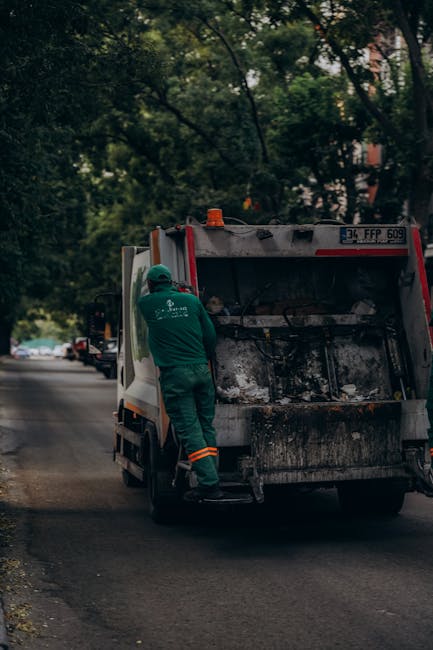
Avoid hidden charges when booking rubbish removal in Lee
If you are trying to avoid hidden charges when booking rubbish removal in Lee, you are probably looking for one thing above all else: a clear price that stays clear. Fair enough. Nobody wants a quote that sounds tidy on the phone and then grows teeth on the day. The good news is that most surprises can be prevented with a bit of checking upfront, and once you know what to ask, the whole process gets much easier.
This guide breaks down how rubbish removal pricing usually works, where extra costs tend to appear, and what you can do to protect yourself before anyone turns up at the kerb with a van. We will also cover practical booking checks, common mistakes, and the kind of questions worth asking when you are comparing providers in Lee.
To make things easier, the article also points you towards useful related pages on waste services, pricing, and safe disposal, so you can judge a quote on more than just the headline number.
Table of Contents
- Why avoiding hidden charges matters
- How rubbish removal pricing usually works
- Key benefits and practical advantages
- Who this is for and when it makes sense
- Step-by-step guidance
- Expert tips for better results
- Common mistakes to avoid
- Tools, resources and recommendations
- Law, compliance, standards, or best practice
- Options, methods, or comparison table
- Case study or real-world example
- Practical checklist
- Conclusion
- Frequently asked questions
Why avoiding hidden charges matters
Hidden charges are not just irritating. They can change the entire value of the job. A quote that looks like a bargain can end up costing more than a straightforward provider who prices properly from the start. That is why it pays to slow down for five minutes before you book.
In rubbish removal, "hidden charges" usually means any cost not made obvious at the first point of contact. It might be an extra fee for carrying waste down stairs, a surcharge for mixed materials, a minimum load charge that was not clearly explained, or an added cost because the van could not park close enough. Sometimes it is a genuine misunderstanding. Sometimes, to be fair, it is just poor communication. Either way, it is avoidable more often than people think.
Lee has the same practical realities as much of South East London: narrow streets in places, awkward access, shared driveways, and the occasional job where someone has underestimated how much stuff is actually in the garage. A sofa, two wardrobes, a broken freezer and several bags "that are just bits and bobs" can quickly become a larger load than expected. The more accurate your booking is, the less room there is for awkward add-ons later.
It also matters because rubbish removal is a service where trust counts. You are allowing people onto your property, often while you are busy moving furniture, clearing a loft, or trying to get a room ready for decorating. When pricing is transparent, everything else tends to feel easier too.
Practical takeaway: the cheapest quote is not always the best quote. The safest quote is the one that explains exactly what is included, what is not, and how any extra work is charged.
How rubbish removal pricing usually works
Most rubbish removal services price jobs in one of a few common ways. Understanding these models helps you spot where hidden costs may creep in. It also makes it much easier to compare providers without getting lost in vague wording.
1. Load-based pricing
This is one of the most common approaches. You pay based on how much space your waste takes up in the vehicle. It sounds simple, and often it is, but only if the provider explains what counts as a half load, a full load, or anything in between. If the estimate is only "roughly a van load," you should ask what that really means in practice.
2. Item-based pricing
Some jobs are priced by item, which can work well for bulky objects such as a mattress, fridge, wardrobe, or sofa. This can be useful if your waste is easy to identify. The catch? Extras can appear if an item is unusually heavy, hard to move, or requires special handling. A large American-style fridge is not the same as a small under-counter unit, and prices may reflect that.
3. Labour + disposal pricing
Many proper quotes combine labour, loading, transport, and disposal into one figure. That is usually a good sign. The clearer the inclusions, the fewer unpleasant surprises. But even here, watch for wording such as "subject to inspection" without any explanation of what could change.
4. Access-related charges
This is where a lot of hidden costs live. If waste must be carried a long distance, down multiple flights of stairs, through a tight hallway, or from a rear garden with poor access, some companies may add labour time or handling fees. That is not always unreasonable, but it should be stated up front.
A sensible provider will ask a few simple questions: what type of waste is it, how much is there, where is it located, and how easy is access? Those questions are not nosy. They are there to stop the quote drifting later.
If you are comparing services, it may help to look at a page like pricing and quotes alongside the main service details. That gives you a better feel for how the company structures costs before you commit.
Key benefits and practical advantages
Taking time to avoid hidden charges is not just about saving money, although that helps. It also makes the whole booking process calmer and more predictable. And honestly, that is half the battle when you are already dealing with clutter, dust, or a packed hallway.
- Clear budgeting: you know what the job will roughly cost before the van arrives.
- Less stress on the day: no awkward back-and-forth when the team turns up.
- Better comparisons: you can compare quotes on a like-for-like basis.
- Fewer disputes: agreed details reduce the chance of misunderstandings.
- More efficient removals: accurate descriptions often make the collection quicker and smoother.
There is also a quality signal hiding in there. Companies that are careful with pricing often tend to be careful elsewhere too: loading responsibly, explaining what can and cannot go, and handling jobs with a bit more professionalism. Not always, of course. But often enough that it is worth noting.
For larger clearances, transparent pricing becomes even more valuable. If you are dealing with a full property clearance, a loft full of old boxes, or garden waste that has been building up for months, small line items can add up fast. That is where the value of proper detail really shows.
Who this is for and when it makes sense
This matters to almost anyone booking rubbish removal, but especially if your job is not a simple one-bag collection. If you are not sure whether your waste is the kind that triggers extra charges, that is exactly when this guide is useful.
Homeowners and tenants
If you are clearing out a spare room, replacing old furniture, or dealing with end-of-tenancy waste, the risk is usually underestimating volume. People often think, "It is only a few bits." Then the pile grows, as it does. A clear quote stops that from becoming expensive later.
Landlords and letting agents
Fast turnaround matters, but so does accountability. If you are arranging a clearance between tenancies, hidden costs can eat into margins. It is better to know in advance whether you are paying for labour, disposal, or any special handling of bulky items.
Tradespeople and site managers
For builders' waste, timing and access are everything. A quote can look fine until the team discovers rubble mixed with timber, plasterboard, packaging, or awkward bagged waste. If you are booking a builders' waste clearance, it pays to be precise about materials and quantities.
People clearing specific rooms or items
Sometimes you do not need a whole-property service. You just need help with a garage, loft, garden, or a bulky sofa that is impossible to move yourself. These smaller jobs can still attract extras if the access is poor or the item is heavier than expected. That is the sort of detail worth pinning down before booking.
If your job involves furniture, a dedicated service such as furniture clearance or mattress and sofa disposal may be more straightforward than a generic rubbish job. Matching the service to the waste usually makes pricing clearer too.
Step-by-step guidance
Here is a practical way to book rubbish removal without getting caught out. Nothing fancy. Just a solid process that keeps pricing under control.
Step 1: Describe the waste clearly
Be specific. "Household rubbish" is vague. "Two wardrobes, one broken chest of drawers, three black bags, and a small pile of cardboard" is much better. The more detail you give, the less room there is for guesswork.
Step 2: Explain access honestly
Say whether the waste is on the ground floor, in the loft, up stairs, through the back garden, or in a garage with limited access. If there is a narrow path, a locked gate, or parking restrictions nearby, mention it. A company can only price what it knows.
Step 3: Ask what is included
Before you book, ask whether the quote includes loading, labour, disposal, VAT if relevant, and any congestion or access-related considerations. A clear answer here is worth more than a discount that turns slippery later.
Step 4: Ask about restricted items
Some items may need separate handling, depending on the provider and the type of waste. Fridges, TVs, certain chemicals, paint, and some electricals can fall into a different category. If your load is mixed, ask how mixed waste is priced and whether any items carry an extra charge.
Step 5: Confirm how the final price is set
Will the team confirm the price after seeing the waste on arrival? If so, ask what would change that price. There is nothing wrong with an on-site check. But it should feel like a confirmation, not a surprise reveal.
Step 6: Get the agreement in writing if possible
A written quote or booking summary helps avoid misunderstandings. Even a simple confirmation message can protect you if there is disagreement later. It is a small thing. Very useful though.
Step 7: Compare more than just price
Cheaper is not always cheaper. Look at responsiveness, clarity, safety standards, and whether the company explains its process properly. If a provider is vague before the job, chances are they will be vague after it too. Not ideal.
Expert tips for better results
These are the little things that tend to make the biggest difference. They are not glamorous, but they save money, time, and a fair bit of annoyance.
- Take photos before booking: a few clear pictures of the waste and access route can prevent misunderstandings.
- Separate easy-to-identify items: keep mattresses, appliances, timber, and general waste apart where possible.
- Measure the bigger pieces: if a wardrobe or sofa is oversized, say so. "Biggish" is not quite enough.
- Check parking and loading access: short walking distance matters more than people think, especially in busy residential streets.
- Ask whether the quote is fixed or estimated: fixed pricing gives more certainty, while estimates may move if the load is misdescribed.
- Keep the waste where it is easy to assess: if it is buried under other items, the job may be priced more cautiously.
A small local example: someone clearing a flat near Lee station might assume the team can park right outside. Then, on the day, there is limited space, a corner to navigate, and a bit of a carry from the building entrance. That may not be a problem, but it is exactly the kind of thing that should be discussed early. Better to say it now than juggle it later in the drizzle.
If you are trying to reduce waste cost overall, it can also help to look at pages like cost-cutting techniques for bulky waste disposal and recycling and sustainability. Sometimes separating reusable or recyclable items can lower the amount that needs full removal.
Common mistakes to avoid
Most hidden charges do not come from nowhere. They usually appear because one side assumed something the other side did not. Here are the traps people fall into most often.
Being vague about the load
This is the big one. If you only say "some rubbish," you are inviting a loose estimate. Loose estimates and tight budgets do not mix well.
Ignoring access problems
Steep stairs, no parking, long carry distances, narrow side passages, locked gates, and basement access all matter. Mention them. Even if it feels a bit petty. Especially then, actually.
Forgetting mixed waste
Mixing general rubbish with builders' waste, electrical items, or bulky furniture can change how the job is priced. If your load is not straightforward, say so early.
Not checking what the service covers
Some quotes include full labour and disposal. Others do not. Do not assume. Ask.
Choosing on price alone
It is tempting. Everyone likes a tidy number. But if one quote is suspiciously low, the missing detail has to live somewhere. Often it turns up later as a charge.
Booking too late
Rushed decisions are where mistakes thrive. If you book at the last minute, there is less time to compare terms, ask questions, or clarify the finer points.
Tools, resources and recommendations
You do not need special software or a spreadsheet full of formulas to avoid hidden charges. A few basic tools and habits are enough.
- Phone camera: take photos of the waste, the access point, and anything awkward like stairs or gates.
- Basic measurements: height, width, and rough depth help more than you might think.
- Short written notes: list what is going, where it is, and anything that might affect loading.
- Comparison mindset: compare like for like, not just headline price.
It also helps to check service pages that explain specific waste types. If you have appliances, for example, a page such as fridge and appliance removal can clarify whether your item needs special handling. For general household clear-outs, house clearance or home clearance may be a better fit than a broad, unspecified collection.
And if you want to understand how a provider thinks about waste handling more generally, it is worth reading what can go in a skip. Even though that is a different service, the logic is useful: different waste streams behave differently, and the price usually reflects that.
Law, compliance, standards, or best practice
When rubbish removal is involved, compliance is not just a box-ticking exercise. It affects how waste is collected, transported, sorted, and disposed of. You do not need to become an expert in waste law, but it is sensible to choose a provider that works carefully and explains its process clearly.
In the UK, reputable waste operators are expected to handle waste responsibly, and householders also have a duty to take care over who removes their rubbish. If waste is handed to the wrong person and dumped illegally, that can create problems for everyone. So, as a customer, you should ask sensible questions and avoid anyone who seems evasive about disposal.
Best practice usually includes:
- clear written or verbal pricing terms
- explanation of what is included in the quote
- appropriate handling of bulky, electrical, or sensitive waste
- safe lifting and loading procedures
- responsible disposal and recycling where possible
It is also worth checking that the company has strong policies around safety and security. Pages such as insurance and safety and health and safety policy can give you a better sense of how seriously the business treats risk. If a provider is careful about safety, they are often more careful about pricing too. Usually. Not always, but usually.
For payment handling, a clear process matters as well. A straightforward page like payment and security can be reassuring if you are concerned about how your details or payment are processed.
Options, methods, or comparison table
If you are weighing up different ways to get rid of waste, the best option depends on the volume, type of material, access, and how much certainty you want over cost. Here is a simple comparison.
| Option | Best for | Cost clarity | Possible downside |
|---|---|---|---|
| One-off rubbish removal | Mixed household waste, bulky items, awkward clear-outs | High if the quote is clear | Can attract extras if the load is misdescribed |
| Specialist item removal | Appliances, sofas, mattresses, single bulky items | Usually high | May not suit mixed loads |
| Room or property clearance | Lofts, garages, homes, flats, offices | Medium to high | Access and labour details matter more |
| Skip-based disposal | Longer jobs, renovation waste, self-loading projects | Medium | Permit, space, and loading limits can affect cost |
For many people in Lee, one-off rubbish removal is the sweet spot because it removes the need to load a skip yourself and can be more flexible around access. But if you are already doing a broader clear-out, a more specific service like garage clearance, loft clearance, or garden clearance may be a cleaner fit.
There is no magic answer. The trick is choosing the service that matches your actual waste, not the one that sounds cheapest at first glance.
Case study or real-world example
Here is a realistic example, not a fairy tale. A couple in Lee were clearing out a spare room before redecorating. They had an old bed frame, a mattress, two shelves, a broken desk, and several bags of mixed clutter from a long, half-finished tidy-up. At first, they asked for a rough price for "some rubbish." The first estimate was broad, which is normal enough, but it left room for misunderstanding.
After a proper chat, they sent photos and explained that the items were on the first floor with a narrow staircase and no easy parking directly outside. The quote then became more accurate. Not cheaper, necessarily, but more honest. And that honesty meant there were no awkward surprises when the team arrived.
The key lesson? The more detail they gave before the booking, the less likely hidden charges were to appear. A simple photo, a clear list, and one honest note about access probably saved them a frustrating back-and-forth later. Tiny thing. Big difference.
This is also where local awareness helps. Lee homes, flats, and side streets can vary a lot in access. What looks like a quick job on paper may need a little more planning in real life, especially if items need to be carried through a communal hallway or parked around the corner.
Practical checklist
Use this quick checklist before you book. It is simple, but it catches most of the issues that lead to hidden charges.
- List the exact items you want removed.
- Estimate the volume as best you can, even roughly.
- Tell the provider about access such as stairs, distance to parking, gates, or narrow passages.
- Ask what the quote includes and what could cost extra.
- Check whether special items like appliances or mixed waste affect the price.
- Request a written confirmation or clear booking summary.
- Compare the full value, not just the cheapest number.
- Confirm payment terms before the job begins.
- Keep photos of the waste in case you need to clarify the booking later.
- Choose a provider that explains things plainly rather than hiding behind jargon.
If you are still gathering details, the main waste removal page can help you see the broader service picture, while local clearance guidance near Lee offers a useful sense of how nearby jobs are typically handled. And yes, sometimes a bit of extra reading now saves a lot of head-scratching later.
Conclusion
Avoiding hidden charges when booking rubbish removal in Lee mostly comes down to one thing: clarity. Clear waste descriptions, clear access details, clear inclusions, and clear payment terms. Nothing flashy. Just solid, sensible booking habits that protect your budget and keep the job moving smoothly.
If you ask the right questions before the van arrives, you will usually avoid the awkward part where the price changes and everyone has to pretend they are not mildly annoyed. Better still, you will be able to compare providers on trust, not just on a headline number. That tends to lead to a much better result.
Get a free quote today and see how much you can save.
And if you want a final bit of encouragement, this really does get easier after the first good booking. Once you know what to check, you will spot the red flags straight away. That is a nice feeling, actually.
Frequently asked questions
What counts as a hidden charge in rubbish removal?
A hidden charge is any extra cost that was not made clear before the job started. Common examples include added labour for stairs, surcharges for bulky items, extra disposal fees for mixed waste, or access charges if the team cannot park nearby.
How do I stop rubbish removal prices from changing on the day?
Give a full description of the waste, share photos if possible, explain access clearly, and ask what would change the quoted price. The more accurate the booking, the less room there is for last-minute changes.
Should rubbish removal be priced by load or by item?
Both can work well. Load-based pricing is good for mixed waste, while item-based pricing is often clearer for single bulky objects like a sofa or fridge. The key is that the method should be explained properly.
Why do access issues affect the price?
Long carrying distances, stairs, tight hallways, or poor parking can increase the labour involved. That does not automatically mean a higher price is unfair, but it should be disclosed before booking.
Are quotes usually fixed or estimated?
It depends on the provider. Some give fixed quotes after receiving enough detail. Others give estimates that may change once the waste is seen in person. Always ask which type you are being given.
What information should I send before booking?
Send a list of items, rough volume, photos if possible, and any access details such as stairs, locked gates, or parking restrictions. That small bit of effort usually pays off.
Do appliances, mattresses, or sofas cost more to remove?
They can, depending on the size, weight, and handling required. Some items need separate treatment or more labour, so it is wise to mention them early rather than assuming they fit into a standard rate.
Is it better to choose the cheapest quote?
Not always. The cheapest quote can become expensive if it leaves out labour, disposal, access, or special item handling. A clear, fair quote is usually better value than a low headline price with extras added later.
How can I tell if a rubbish removal company is trustworthy?
Look for clear explanations, sensible questions about the job, straightforward pricing, and a professional approach to safety and payment. If a company seems vague before the booking, that is worth noting.
Can I reduce the cost by sorting waste myself?
Yes, sometimes. Separating reusable or recyclable items from mixed waste can make the load easier to assess and may reduce the amount that needs full removal. It also helps the provider quote more accurately.
What should I do if a company adds charges I was not told about?
Ask for a clear explanation and compare it against the original agreement or booking message. If the cost was not disclosed properly, you are entitled to question it. Stay calm, keep it factual, and ask for the breakdown in writing if needed.
Does local access in Lee make rubbish removal more expensive?
It can, depending on the property and the street. Narrow access, limited parking, and longer carries can all affect the quote. That is why local, honest detail matters so much when arranging collection in Lee.